jueves, 21 de mayo de 2009

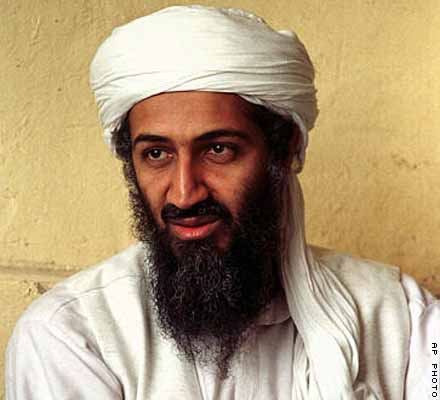
Bin Laden


*He was born 10 March 1957

*he is a member of the prominent Saudi bin Laden family and the founder of the terroristorganization al-Qaeda, best known for the September 11 attacks on the United States and is also the MOST WANTED person in the world.

*Since 2001, Osama bin Laden and his organization have been major targets of the United States' "War on Terrorism." Bin Laden and fellow Al-Qaeda leaders are believed to be hiding in the border of Afghanistan and Pakistan's Federally Administered Tribal Areas.

Reagan, Sandinistas & Contras


The Contras is a label given to the various rebel groups opposing Nicaragua's FSLN (Frente Sandinista de Liberación Nacional)Sandinista Junta of National Reconstruction government following the July 1979 overthrow of Anastasio Somoza Debayle. Although the Contra movement included a number of separate groups, with different aims and little ideological unity, the Nicaraguan Democratic Force (FDN) emerged as by far the largest.

The term "Contra" comes from the Spanish la contra, short for la contra-revolucion, in English "the counter-revolution", an expected byproduct of many revolutions. 

Following the July 1979 fall of dictator Anastasio Somoza Debayle and the rise to power by the Sandinistas, the Nicaraguan National Guard disbanded. Those in the higher ranks had the means to escape and found a route to exile. The others (thousands) surrendered to the victorious Sandinista revolutionary forces and were placed in concentration camps to await trial. Those who had reason to fear arrest for war crimes committed remained at large but were persecuted, and sometimes killed. 

martes, 19 de mayo de 2009

Pinochet/Allende/Nixon


Pinochet, Allende and Nixon in Chile

Ho Chi Minh /Domino Theory


*He was born on May 19, 1890

*He was a Vietnamese Communistrevolutionary and statesman who was Prime Minister and president of the Democratic Republic of Vietnam

*Ho Chi Minh led the Viet Minh independence movement from 1941 onward, establishing the communist-governed Democratic Republic of Vietnam in 1945 and defeating the French Union in 1954

*He lost political power inside North Vietnam in the late 1950s, but remained as the highly visible figurehead president until his death. 

*

Kennedy, Krushcev, and Castro


*The Cuban Missile Crisis was a confrontation between the United States, the Soviet Union, and Cuba in October 1962, during the Cold War.

*The Americans feared the Soviet expansion of communism or socialism, but for a Latin American country to ally openly with the USSR was regarded as unacceptable, given the Russo-American enmity since the end of the Second World War in 1945

*n September 1962, the Cuban government saw significant evidence that the U.S. would invade, including a joint U.S. Congressional resolution authorising the use of military force in Cuba if American interests were threatened,[5] and the announcement of a U.S. military exercise in the Caribbean planned for the following month

*As a consequence, Castro and Soviet premier Nikita Khrushchev agreed to secretly place strategic nuclear missiles in Cuba. Like Castro, Khrushchev felt that a U.S. invasion of Cuba was imminent, and that to lose Cuba would do great harm to the spread of communism, especially in Latin America.

Arbenz, Armas, and the CIA


*Documents, including an instructional guide on assassination found among the training files of the CIA's covert "Operation PBSUCCESS," were among several hundred records released by the Agency on May 23, 1997 on its involvement in the infamous 1954 coup in Guatemala.

*Arbenz was elected President of Guatemala in 1950 to continue a process of socio- economic reforms that the CIA disdainfully refers to in its memoranda as "an intensely nationalistic program of progress colored by the touchy, anti-foreign inferiority complex of the 'Banana Republic.'

CIA records on assassination planning in Guatemala were first gathered pursuant to a Freedom of Information Act lawsuit filed in 1979. All of them were withheld on national security grounds at that time

*In Guatemala, of course, "Operation Success" had a deadly aftermath. After a small insurgency developed in the wake of the coup, Guatemala's military leaders developed and refined, with U.S. assistance, a massive counterinsurgency campaign that left tens of thousands massacred, maimed or missing.

Kim Il Sung


*Born on April 15, 1912

*Korean communist politician who led North Korea from its founding in 1948 until his death. 

*He held the posts of Prime Minister from 1948 to 1972 and President from 1972 to his death.

*Following his death in 1994, he was succeeded by his son Kim Jong-il. North Korea officially refers to Kim Il-sung as the "Great Leader" and he is designated in the constitution as the country's "Eternal President"


The korean War


The Korean War refers to a period of military conflict between North Korea and South Korea regimes, with major hostilities lasting from June 25, 1950 until thearmistice signed on July 27, 1953. The conflict arose from the attempts of the two Korean powers to re-unify Korea under their respective governments

While some have referred to the conflict as a civil war, many other factors were at play. Each side was supported by external powers and the conflict expanded, becoming a proxy war in the Cold War between the United States and the Soviet Union. The term has also been used to describe both the events preceding and following the main hostilities.

lunes, 18 de mayo de 2009

Mao Tse Tung


Mao Tse tung

*He  was born on Dec. 26, 1893

*Mao Tse-tung founded the People's Republic of China in 1949

*He had also been one of the founders of the Chinese Communist party in 1921, and he is regarded, along with Karl Marx and V. I. Lenin, as one of the three great theorists of Marxian communism.

*When the Japanese invasion of 1937 forced the CCP and the Kuomintang once again to form a united front, the Communists gained legitimacy as defenders of the Chinese homeland, and Mao rose in stature as a national leader.

*Toward the end of his life, Mao put forward a new analysis of the international situation in which the world's states are divided into three groups: the underdeveloped nations, the developed nations, and the two superpower

*He stressed the importance of land redistribution for the benefit of the rural peasantry, and his theories have strongly influenced the nonindustrialized Third World.

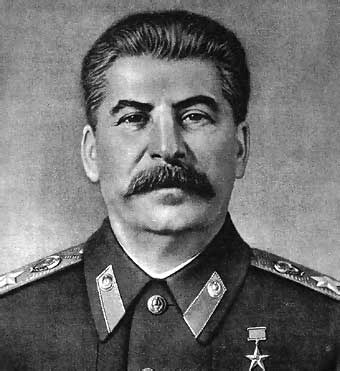
Stalin


Joseph Stalin

*Born on December 18, 1878

*He was the general secretary of the communist party of the Soviet Union's central comittee.

*Stalin launched a command economy, replacing the New Economic Policy of the 1920s

*During the late 1930s, Stalin launched the Great Purge (also known as the "Great Terror"), a campaign to purge the Communist Party
 
*In 1939, the Soviet Union under Stalin signed a non-aggression pact with Nazi Germany, followed by a Soviet invasion of PolandFinland, theBalticsBessarabia and northern Bukovina.

*He died on March 5. 1953


U.S.S.R. world map